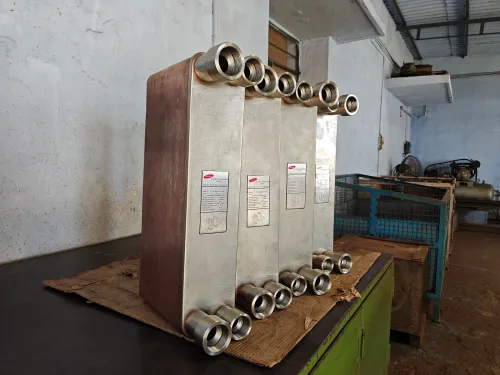
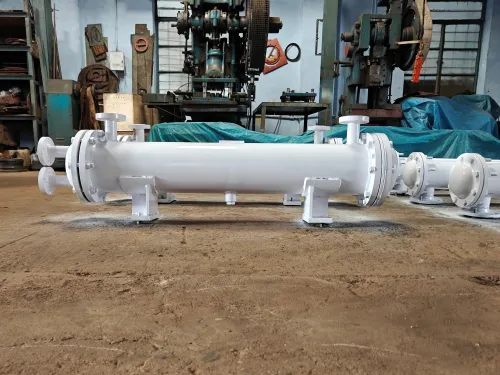
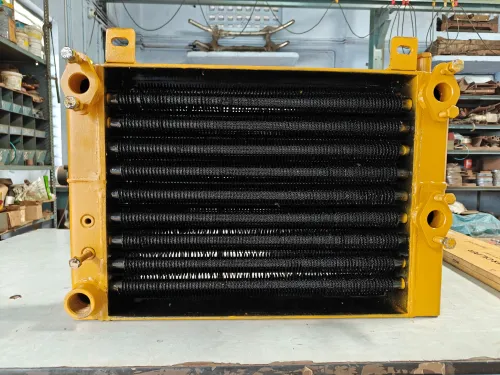
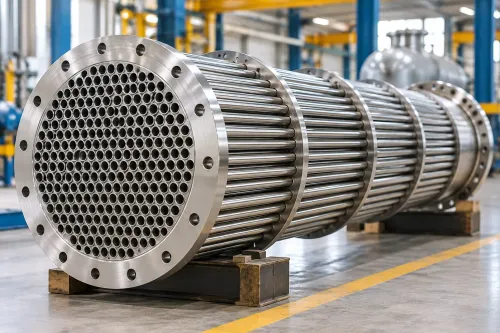
Industrial facilities often require heat transfer equipment that combines efficiency, flexibility, and ease of maintenance. A Gasketed Plate Heat Exchanger meets these requirements by offering high thermal performance within a compact design. Because the plates can be removed individually for inspection or cleaning, this type of exchanger is widely used in industries where regular maintenance is essential.
Understanding its advantages helps engineers and procurement teams make better equipment decisions for both new projects and plant upgrades.
What Makes This Design Different?
Unlike welded heat exchangers, gasketed plate models use sealing gaskets between plates to create separate flow channels.
This construction offers several advantages:
- Plates can be cleaned individually
- Capacity can often be expanded by adding plates
- Maintenance is quicker
- Heat transfer efficiency remains high
- Downtime during servicing is reduced
These features make the equipment particularly suitable for industries with changing production requirements.
Applications Across Multiple Industries
A gasketed plate heat exchanger is commonly used in:
- Food processing
- Dairy manufacturing
- Pharmaceutical production
- Chemical industries
- Beverage plants
- HVAC systems
- Textile manufacturing
- Industrial refrigeration
- Process cooling
- Water treatment facilities
Many industries operating in Coimbatore prefer this solution where cleaning frequency and production flexibility are important considerations.
Key Selection Criteria
Choosing the correct exchanger involves evaluating several technical factors.
Plate Material
Material should match the chemical properties of the process fluid while resisting corrosion.
Gasket Compatibility
The gasket material must withstand both operating temperature and chemical exposure.
Pressure Rating
Equipment should safely accommodate maximum operating pressure.
Heat Transfer Requirement
Cooling or heating demand determines plate size and overall configuration.
Maintenance Schedule
Facilities with frequent cleaning requirements benefit from designs that simplify plate removal.
Common Maintenance Mistakes
Avoiding these mistakes can improve service life:
- Ignoring gasket wear
- Delaying plate cleaning
- Using incompatible cleaning chemicals
- Operating above design pressure
- Skipping routine inspections
- Reusing damaged sealing components
Preventive maintenance reduces operational risk while maintaining thermal efficiency.
When Should You Upgrade?
An upgrade may be worth considering if your existing heat exchanger experiences:
- Reduced cooling efficiency
- Frequent gasket failures
- Production expansion
- Increased energy consumption
- Longer maintenance shutdowns
- Higher operating temperatures
Evaluating equipment performance regularly helps identify replacement needs before failures occur.
Choosing a Reliable Manufacturing Partner
Industrial businesses increasingly look for customized heat transfer solutions that align with their production goals and maintenance capabilities. Premier Engineering Works supports industries across Coimbatore with engineered thermal equipment designed for dependable long-term performance.
Selecting the right gasketed plate heat exchanger contributes to improved energy efficiency, easier maintenance, consistent process performance, and lower operating costs without compromising reliability.