An air-cooled heat exchanger is practical when ambient air can remove the required process heat at the hottest design condition without consuming cooling water or exceeding the site’s space, noise, and power limits. By the end, you will be able to test that choice against water-cooled equipment, identify seasonal and layout risks, and request a quotation with the data needed for a credible thermal rating.
Key takeaways
- Check outlet temperature at the hottest design-air temperature.
- Compare fan power, water use, maintenance, and noise before choosing.
- Specify airflow direction, tube access, fouling risk, and acoustic limits.
- Include process fluid, flow rate, temperatures, pressure, and site conditions in quotations.
What an air-cooled heat exchanger does and when the basic test passes
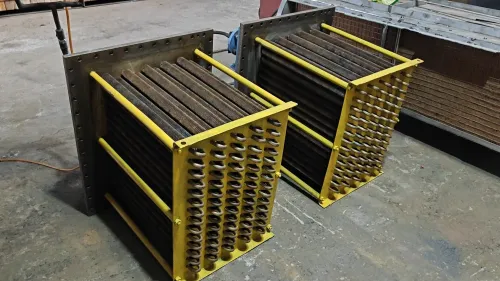
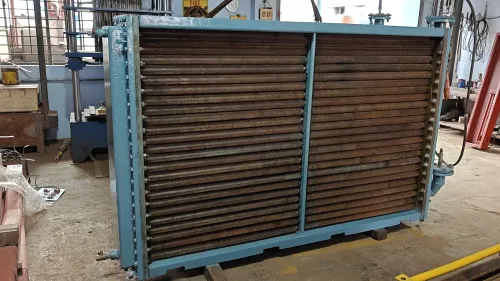
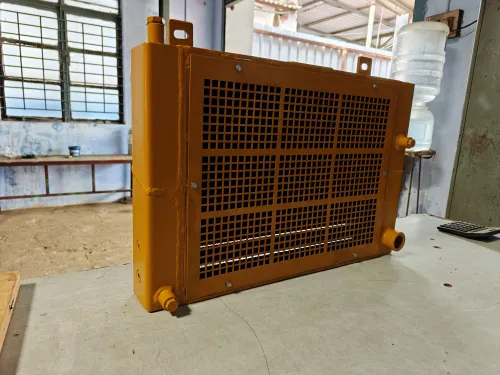
The practical air-cooled heat exchanger definition is equipment that transfers heat from a process fluid inside tubes to ambient air flowing across finned tube surfaces. Fans move air through the bundle; the air absorbs heat from the tube wall and carries it away. This supports process fluid cooling and refrigerant cooling without a cooling-water circuit.
The first-pass test is simple: calculate whether the available summer air can remove the stated heat load at the required outlet temperature.
- State the heat load in kW, including normal, maximum, start-up, and turndown cases.
- Use the site’s summer design dry-bulb temperature, not the annual average, as the entering-air temperature.
- Subtract that air temperature from the required process-fluid outlet temperature. The remaining value is the allowable approach; a near-zero approach signals poor suitability.
- Check the duty across actual operating hours, seasonal temperatures, night operation, and winter conditions.
- Confirm that the site has enough plot space, fan electrical capacity, maintenance access, and tolerance for fan noise.
An air-cooled exchanger cannot cool below the entering-air dry-bulb temperature. If summer ambient air is 38°C and the process outlet target is 42°C, only a 4°C approach remains; fouling, airflow loss, or a hotter hour can break the target.
API Standard 661 provides a recognized basis for petroleum and petrochemical service, but your datasheet must still define the process cases and thermal guarantee.
Check summer duty before accepting an air-cooled rating
Accept the rating only if it meets the outlet target at the site’s summer design dry-bulb temperature. An air-cooled heat exchanger cannot cool process fluid below the entering-air dry-bulb temperature, so an annual average gives a falsely comfortable result.
1. State the summer design dry-bulb temperature and required outlet temperature. Their difference is the available temperature margin; compare it with the allowable approach temperature. A small approach leaves little capacity when hot air reduces the driving force.
2. Convert the process flow and temperature change into process heat load kW. Check that the exchanger handles the peak summer duty, not only the normal or winter case. A rating based on average duty can miss the hottest operating hours.
3. Specify the hours at which peak duty occurs. A short afternoon peak may justify fan turndown or a larger margin, while continuous operation demands a rating that holds throughout the hot period.
4. Require the quotation to state the design ambient, fouling allowance, fan operating condition, and guaranteed outlet temperature or duty. Without these figures, two ratings are not comparable.
Seasonal conditions can reverse the decision. Winter dampers, fan controls, or recirculation prevent overcooling and freezing, but they do not rescue an undersized summer bundle.
If the required outlet temperature sits close to summer ambient, or the unit condenses refrigerant at low pressure, consider partial condensation or hybrid dry-wet cooling rather than accepting a nominal rating.
Compare dry air cooling with water-based alternatives
Choose dry air cooling when water is scarce, expensive to treat, difficult to dispose of, or restricted by permit, and the process can accept a warmer summer outlet.
An air-cooled heat exchanger removes water consumption and cooling-tower drift, plume, blowdown, and Legionella management, but it replaces them with fan electricity, noise, fin cleaning, and mechanical maintenance.
| Option | Main advantage | Main drawback | Choose it when |
|---|---|---|---|
| Air-cooled heat exchanger | Directly cools process fluid without routine water use | Larger plot, lower air-side heat transfer, fan and fin maintenance | You have space and electrical capacity, and the outlet target stays above peak summer ambient |
| Water-cooled shell-and-tube exchanger with cooling water | Compact exchanger and strong heat-transfer performance | Requires treated water, pumps, corrosion control, and a heat sink | Tight plot limits or a close temperature approach outweigh water costs |
| Cooling tower | Rejects heat efficiently through evaporation | Consumes water and needs blowdown, chemical treatment, drift control, and Legionella management | A recirculating cooling-water network already serves several users |
| Evaporative condenser | Delivers low condensing temperatures with a compact installation | Water treatment, plume, scaling, and biological-control duties remain | Refrigerant or condensing service needs performance close to wet-bulb temperature |
| Dry cooling tower | Preserves a closed water loop without evaporative consumption | Adds pumps and a secondary water circuit; still needs large air-side surface | You need indirect cooling or hydraulic separation from the process |
Do not treat a dry cooling tower as a smaller ACHE; compare its extra loop, pumps, controls, and heat exchanger. For low-pressure condensation or outlet temperatures near summer ambient, a wet or hybrid system can protect condensing pressure better than fully dry cooling.
Match the arrangement to airflow, access, contamination, and noise limits
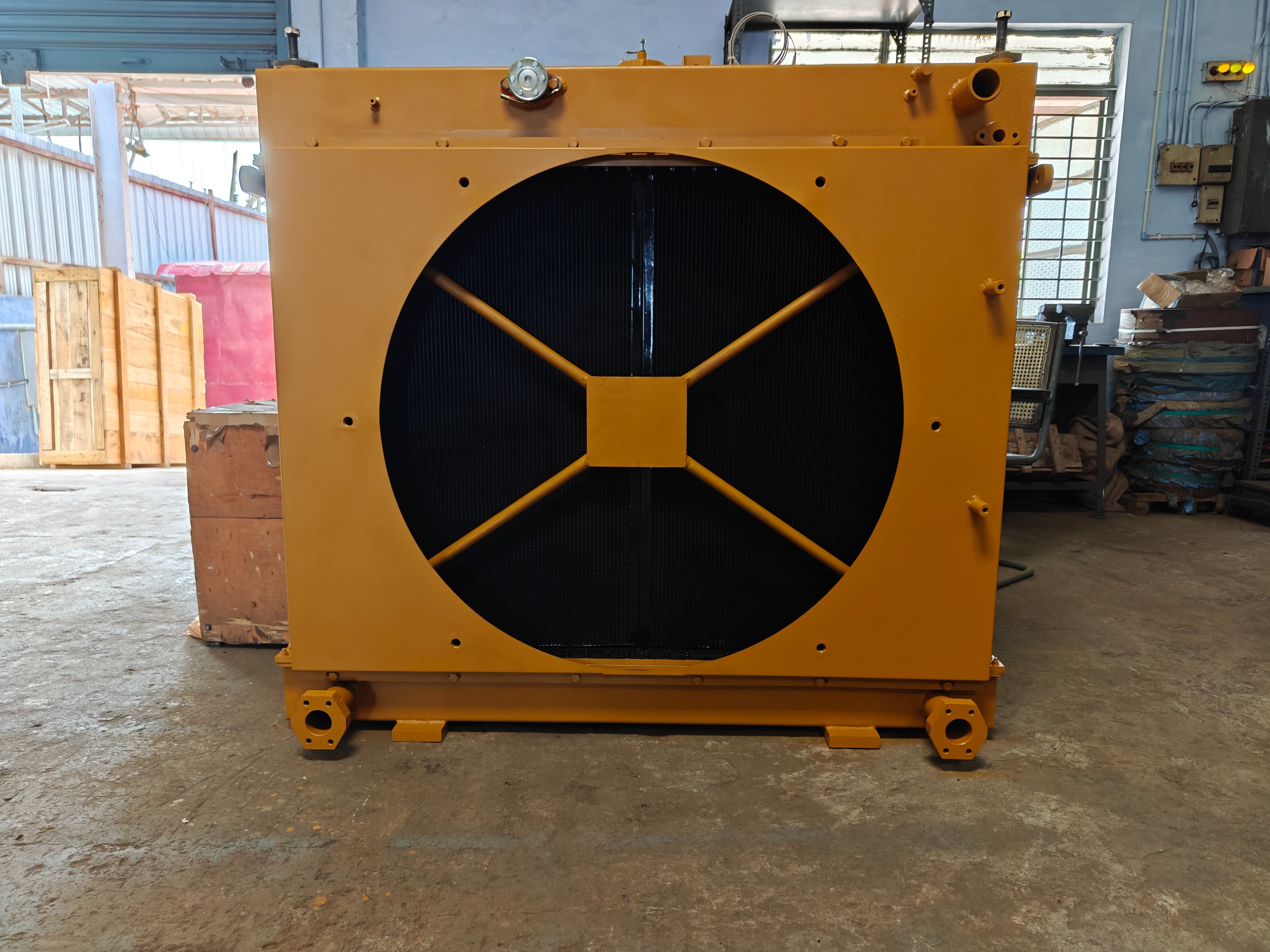
Put the fan on the side that keeps discharged air away from the inlet. A forced-draft unit places fans below the bundle, making motors, belts, and bearings easier to reach, but its warm discharge can recirculate around walls, pipe racks, or nearby units.
An induced-draft unit discharges above the bundle and usually limits recirculation; maintenance then moves higher and needs platforms, lifting access, and fall protection.
| Option | Access and airflow | Main site consequence |
|---|---|---|
| Forced-draft | Fan below the bundle; simple access | Easier maintenance, but greater recirculation risk near structures |
| Induced-draft | Fan above the bundle; upward discharge | Better separation from hot air, with higher maintenance access and fan noise |
| Horizontal tube bundle | Broad, low-profile bank | Easier face cleaning and inspection, but a larger ground footprint |
| Vertical tube bundle | Upright, compact bank | Smaller footprint and potentially better drainage, but more difficult cleaning, lifting, and access |
Specify the layout after checking contamination. Dust, fibres, insects, and oil increase air-side resistance; wider fin spacing and accessible faces extend cleaning intervals but require more bundle area. Do not treat a dry exchanger as maintenance-free.
For water-bearing process fluid, require fan staging or variable speed, inlet louvers, bypasses, hot-air recirculation, minimum-flow protection, and drain or heat-trace provisions. Switching fans off alone leaves stagnant cold spots.
Set the noise limit at the property boundary, not just at the fan. State the design ambient, fouling allowance, fan condition, and guaranteed outlet temperature in the datasheet; API Standard 661 does not choose those project-specific values.
Prepare a quotation request that exposes the real design constraints
A defensible quotation starts with the worst operating case, not “cool 50 kW.” State the fluid, flow range, inlet and guaranteed outlet temperatures, heat load in kW, phase change or condensation duty, allowable pressure drop, and the required turndown range.
Provide these inputs:
- Process: composition, viscosity, density, fouling allowance, operating temperature and pressure, design pressure, relief-set pressure, and fluid hazard classification.
- Site: summer design dry-bulb temperature, altitude, solar exposure, dust or corrosive atmosphere, available plot dimensions, maintenance access, noise limit, and winterization requirements.
- Mechanical: preferred horizontal or vertical arrangement, tube and header materials, corrosion allowance, insulation, lifting limits, access platforms, and the inspection and testing basis, such as API Standard 661.
- Electrical: available voltage, phase and frequency, motor starting method, hazardous-area classification, maximum connected load, and power-factor requirements.
- Controls: fan staging or variable-speed control, automatic outlet-temperature setpoint, alarm trips, redundancy, remote signals, and permitted minimum fan speed.
| Quotation input | Weak request | Defensible request |
|---|---|---|
| Process guarantee | “Meet the outlet temperature” | “Outlet temperature at summer design ambient, stated flow and fouling allowance” |
| Fan basis | “Select suitable fans” | Fan count, operating speed, turndown range, noise limit, and standby requirement |
| Mechanical basis | “API compliant” | API Standard 661 plus design pressure, materials, inspection, and test requirements |
| Site basis | “Outdoor installation” | Ambient temperature, altitude, dust, footprint, access, and winter conditions |
Premier Engineering Works can use this level of detail to separate a genuine thermal guarantee from a rating based on an easier ambient case. Insist that the offer state guaranteed duty, outlet temperature, pressure drop, power consumption, and test conditions.
Related product
 | Cooling Equipment Horizontal / Vertical Air Cooled Condenser Premier Engineering Works specialises in designing and manufacturing custom-built horizontal and vertical air-cooled condensers to meet the unique... View product → |
Frequently asked questions
When is an air-cooled heat exchanger a practical choice?
Choose it when ambient air can remove the required heat without a cooling-water circuit and the process outlet temperature remains acceptable at design summer conditions.
Why must summer duty be checked before accepting an air-cooled rating?
Air-cooled performance falls as ambient temperature rises, so check the required outlet temperature at the site’s hottest design-air temperature rather than at a mild reference condition.
How does dry air cooling compare with water-based cooling?
Dry air cooling avoids water consumption, water treatment, and cooling-tower maintenance; water-based systems can achieve lower process temperatures and greater heat-removal capacity in a smaller footprint.
What should you include in an air-cooled heat exchanger quotation request?
Provide process fluid, flow rate, inlet and outlet temperatures, operating and design pressure, allowable pressure drop, site elevation, summer air temperature, fouling conditions, access limits, and noise requirements.